Travels Through American History in the Mid-Atlantic
Travels Through American History in the Mid-Atlantic brings to life sixteen historical destinations in Pennsylvania, Maryland, Washington, D.C., the Potomac Valley and Virginia. I walked the sites, interviewed historians and rangers, and read letters and diaries of men and women who witnessed—and at times made—history at these iconic places. Vivid prose reveals how war, terrain, weather, politics, and illness shaped our American narrative, beginning in the colonial and revolutionary eras, continuing through the War of 1812 and ending with the Civil War (seven of the 16 chapters are devoted to the latter).
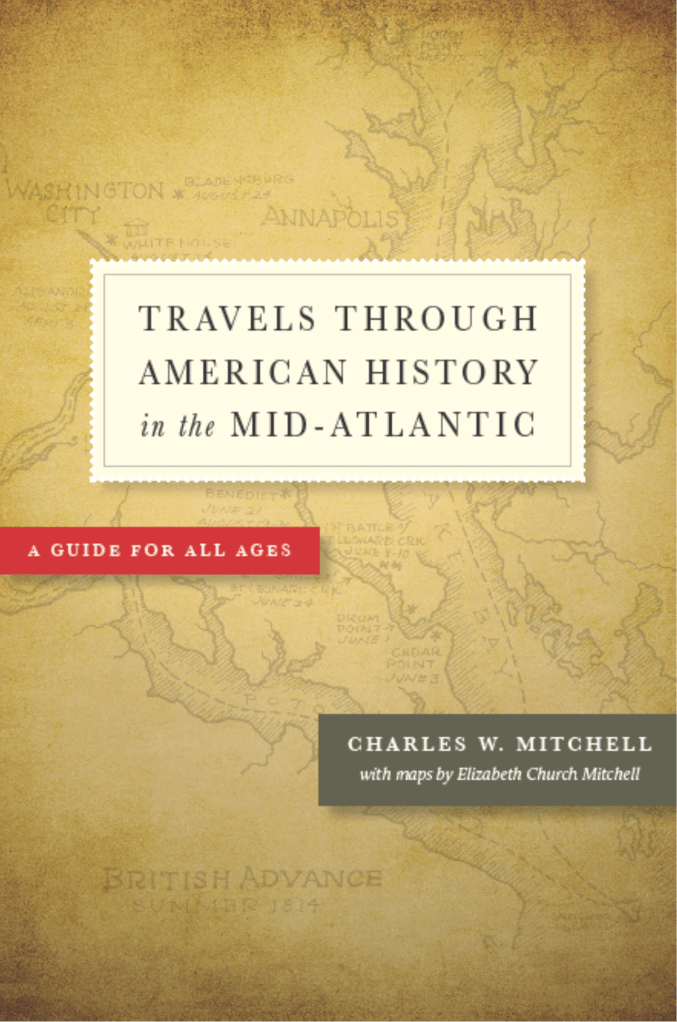
Practical travel advice is wrapped in historical context, helping readers appreciate the importance of these sites and their attractions and activities to engage the whole family.
Travels Through American History in the Mid-Atlantic won a Lowell Thomas Gold Medal as the best travel guidebook from the Society of American Travel Writers in 2016, chosen from 19 entrants.
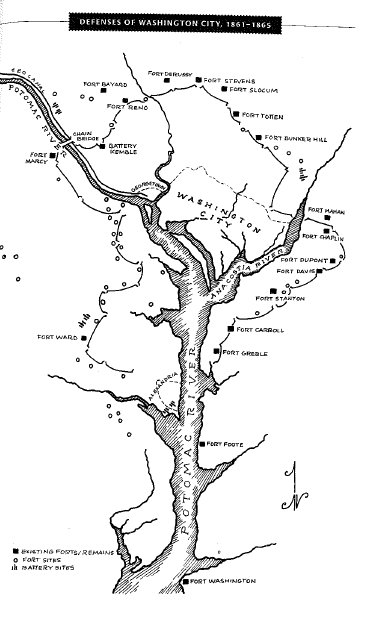
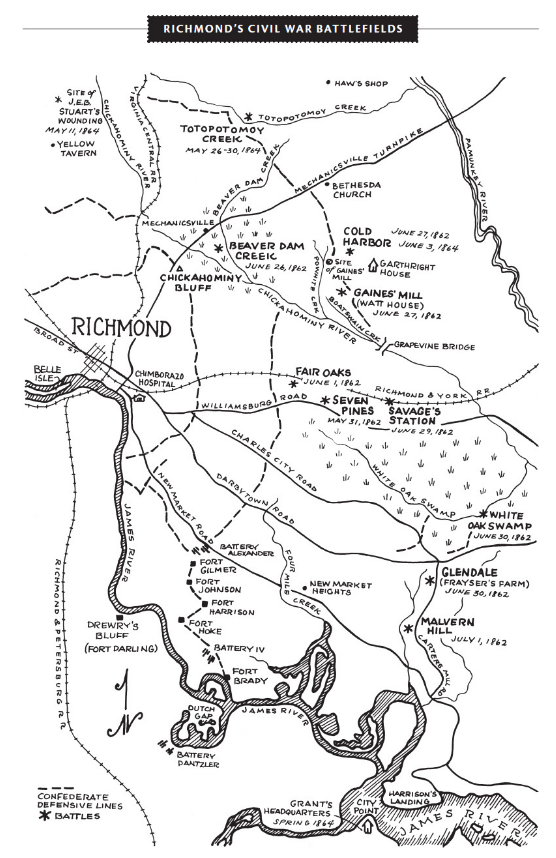
Click here to see examples of the hand-drawn maps in the book
From the Book: Participants Speak:
“There are continued complaints to me of the misbehavior of your wife; who I am told sows sedition among the men. If she is not immediately sent from the Camp, or I hear any more complaints of such irregular Behavior upon my arrival there; I shall take care to drive her out myself.” Gen. George Washington to a Captain at Fort Ashby, a colonial fort in what is today West Virginia. (page 31)
Told that British general Sir William Howe had taken Philadelphia, whose firesides and ladies he was enjoying during the winter of 1777-78, when the Continental Army was encamped at Valley Forge, Benjamin Franklin replies, “I beg your pardon, but Philadelphia has taken Howe.” (page 49)
Union brigade commander Oliver O. Howard, after having his right arm amputated, is consoled by Gen. Phil Kearny, who had lost his left in the Mexican War: “‘General, I am sorry for you, but you must not mind it; the ladies will not think the less of you.’ Howard laughs heartily and observes that henceforth they can purchase their gloves together.” (page 116)
Walt Whitman on Abraham Lincoln: “I see the President almost every day.” Lincoln appears “Rusty and dusty…his face with deep cut lines, seams…a curious looking man, very sad. We have got so that we exchange bows, and very cordial ones.” (page 134)
Gen. Winfield Scott snarls that the poorly defended Fort Washington, manned by one Irish pensioner, “might have been taken by a bottle of whiskey.” (page 140)
“We could blow that damned fort out of existence if we could run a mine shaft under it.” Pennsylvania coal miner and Union Army soldier in a letter to his family, describing plans to tunnel under Confederate defenses at Petersburg and blow them up, summer 1864. (page 183)
“No man can ever describe what followed. Some sat at the roots of trees and cried as if their hearts would break. Some grasped the rifle that they had carried for years and smashed them. Some cursed bitterly, some prayed.” Private in a Mississippi regiment describing the Confederate surrender at Appomattox, April 1865 (page 191).
Praise for Travels Through American History in the Mid-Atlantic:
“Mitchell offers a serious and scholarly narrative on the special qualities of sixteen historic sites and regions on or near the east coast. The depth of each chapter and the learned, accessible prose distinguish this winner from the typical guidebook.” From the 2016 Society of American Travel Writers Lowell Thomas Journalism Awards Video: 2016 SATW Foundation Lowell Thomas Travel Journalism Awards
“A tour d’horizon that is also a tour de force: This book is a perfect blend of history, travel, and excellent writing. The result is a book for the whole family–a guide that is truly useful, enjoyable, and inspiring. In fact, I was inspired to learn much more about sites that are almost in my own backyard. Two specific ways in which the author accomplishes this feat are (1) through a tone that is never pretentious or condescending but always warm and welcoming; and (2) through a judicious, informed, and up-to-date grasp of historical sources and evidence. Thus a splendid achievement: highly readable, utterly reliable, and strongly recommended. Moreover, the maps, by Elizabeth Church Mitchell, are first-rate: clear and helpful.” David Hein, Ph.D., Distinguished Teaching Fellow at the Russell Kirk Center for Cultural Renewal
“Mitchell combines a regional travel guide with direct quotations, immediate revelations, and stories that illuminate the deeper historical context of each site. He has sought out engaging reenactments and the best exhibits, where remarkable artifacts and excellent displays bring history alive. This is more than sightseeing.” Kathryn Schneider Smith, editor of Washington at Home: An Illustrated History of Neighborhoods in the Nation’s Capital
“I am a nonfiction nut and this book follows two very important nonfiction criteria – the book is under 250 pages and it has maps – lots of them! I have started many nonfiction books that I didn’t finish or enjoy because they were too long and/or didn’t have maps so that you could follow the journey or event that the author was describing.” H.K., perceptive reader
 Site Title